Choosing cordless garden tools without buying a whole new shed
Match outdoor tools to your garden, workload and battery system before comparing kits or expanding a cordless range.
Read the guide → chuck & bit.Our approach
Break a garden tidy-up into real tasks before choosing hand tools, cordless equipment or a new battery system.
Open the planning checklist ↓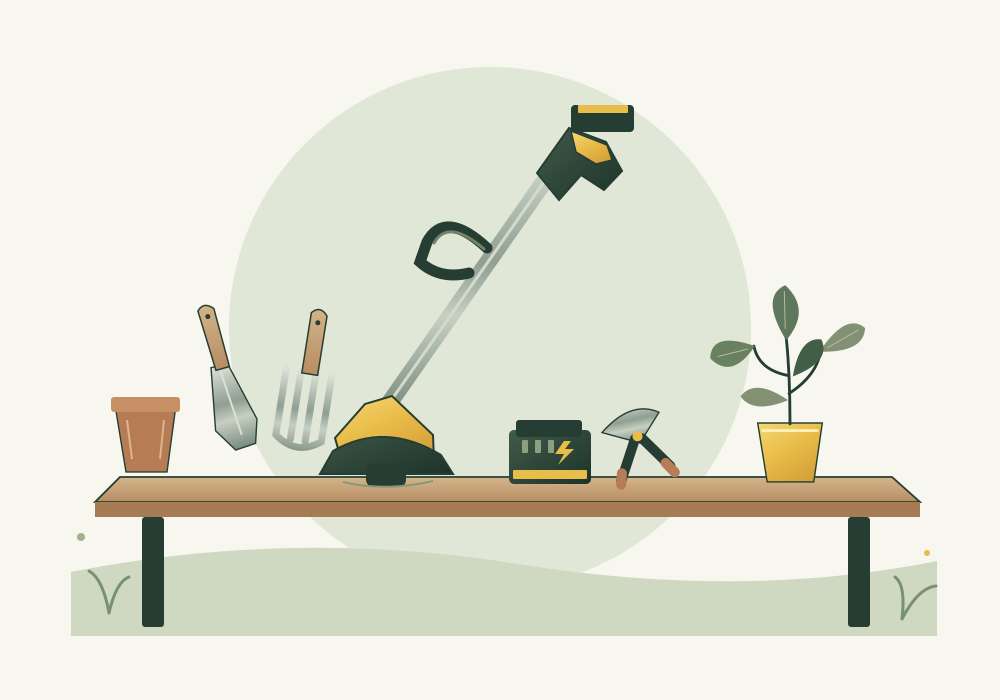
A small lawn, an overgrown border and a hedge along a boundary ask different things of your equipment. A tidy-up is easier to plan when it is a short list of tasks rather than a shopping list of machines. Walk the space first, consider what should stay and work out how material will be handled. Some jobs are best left to a specialist.
Separate mowing, edging, hand pruning, leaf collection and clearing into distinct tasks. Identify plants before removing them and check whether wildlife, protected vegetation or local restrictions affect the work. A bare-looking garden is not automatically a healthier or more useful one.
Look at slopes, access routes, boundaries, uneven ground and where other people or pets may be. The space around a task matters as much as the patch being worked on. Tall, unstable or difficult-to-reach work calls for a different plan from accessible routine maintenance.
Plan collection, storage and disposal before creating a large pile. Check local arrangements and keep unknown or unsuitable material separate. The practical limit may be how you can move and handle waste, rather than the cutting capacity of a new tool.
Choose exact equipment only when the task and its requirements are clear.
Suitable pruners, a rake, a spade or a garden fork may cover a useful part of the brief. Assess each task before assuming that a powered tool will be easier or necessary.
A mower, grass trimmer and edging tool have different roles. Choose for the area, terrain and access, with attention to handling and storage rather than comparing a headline power figure alone.
Check the intended vegetation, reach, controls and protective requirements for the exact equipment. A longer tool changes balance and access needs; it does not make every elevated or awkward cut suitable.
If buying cordless equipment, verify the exact battery and charger compatibility. An indoor tool battery from the same brand is not automatic evidence that it fits an outdoor range or meets a particular tool’s requirements.
Use these checks to identify the information you still need. Ticking a box records your own planning; it does not certify the installation or the work.
The checklist is temporary and stays in this page. Nothing is submitted or saved.
A tool designed around a much larger or more demanding space may be awkward to store and handle in yours. Compare the work you will repeat, not the biggest job you can imagine.
A long handle is not a replacement for a suitable working position. If the job cannot be reached and controlled as the equipment requires, change the plan rather than stretching the tool’s purpose.
Cutting can be the quick part of a tidy-up. Leave space and effort for moving, sorting and disposing of material, and avoid making piles that block access or conceal hazards.
You have a useful brief when you know which tasks need tools, which need patience and which need professional help. Build the equipment list around that brief. A considered mix of hand tools and suitable powered equipment can make more sense than committing to a whole range at once.
Match outdoor tools to your garden, workload and battery system before comparing kits or expanding a cordless range.
Read the guide →Find the instructions that matter for charging, storage, compatibility and dealing with a damaged tool battery.
Read the guide →Compare tool sets and cordless combination kits by the jobs they cover, the accessories you need and the cost of getting started.
Read the guide →Turn a vague idea into a manageable job, with a clear scope, a realistic shopping list and a sensible stopping point.
Read the guide →