THE RIGHT TOOL. A BETTER BUILD. Independent thinking for UK tool buyers
Our approach
LOOK PAST THE LABEL

Same project.
Different choices.

Similar-looking tools can do very different jobs. Find out what sets them apart, what matters for your work and where each option has its limits.

Start with your task
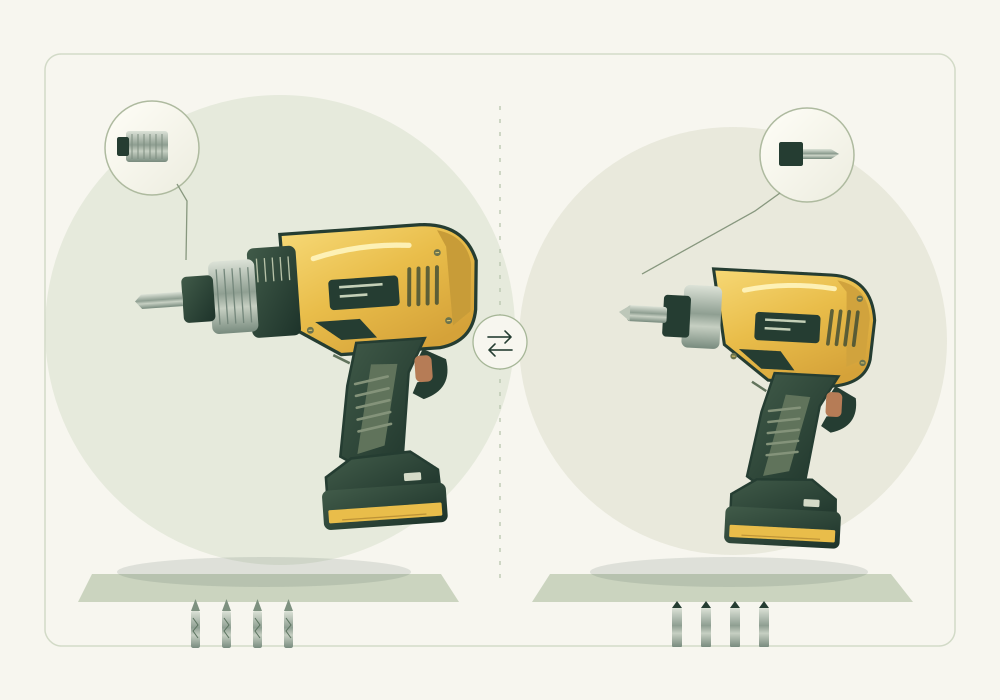
THE COMPARISON BENCH / 02Illustration of two different tools arranged for comparison

Compare the job.
Then compare the tool.

FIND YOUR STARTING POINT

What are you trying to do?

This is a guide to tool types. Check the exact material and manufacturer instructions before choosing a model or accessory.

01 / Making holes and everyday repairs

Start with a drill driver.

For holes in suitable timber or metal and everyday screw driving, a drill driver is a flexible starting point. Masonry changes the choice: check the material and whether a combi or SDS drill is more appropriate.

Choose a cordless drill →
02 / Driving lots of screws

Compare a drill and an impact driver.

An impact driver is built around turning fixings with rotational impacts. A drill remains useful for pilot holes and controlled screw driving. The right answer may be two complementary tools rather than replacing one with the other.

Understand the difference →
03 / Cutting timber or sheet material

Choose the kind of cut first.

A hand saw, circular saw, jigsaw and mitre saw solve different cutting problems. Consider straight or curved cuts, the workpiece size and how it can be supported before comparing individual machines.

Explore the saw types →
04 / Smoothing or preparing a surface

Match the sanding action to the surface.

Large flat areas, edges and detailed shapes call for different approaches. Start with the condition of the surface and the finish you need; then consider the sander, abrasive and dust control together.

Choose a sanding approach →
THE EVERYDAY CORDLESS QUESTION

Drill driver, impact driver
or combi drill?

These categories overlap in appearance, but the mechanism and intended job are different. Use this as a starting point, not a substitute for model documentation.

Tool-type differences at a glance
What to compareDrill driverImpact driverCombi drill
Main roleDrilling holes and driving screwsRepeated or demanding screw drivingDrilling and driving, with a hammer mode for suitable masonry
Bit fittingAdjustable chuckUsually a quick-release hex holderAdjustable chuck
Control to look forClutch, trigger control and speed rangeSuitable modes and control for the fixingDrill, drive and hammer modes appropriate to the task
Keep in mindNot every drill driver has a masonry modeRotational impacts are not a substitute for masonry hammer actionA hammer mode does not make it an SDS drill
Read the drill driver vs impact driver guide →
A CLOSER LOOK

Understand both sides.

How we compare →
MAKE THE COMPARISON COUNT

Four things worth
putting side by side.

A model name and a headline torque figure are only a small part of the decision. Keep these details in view.

  1. The exact version

    A model family can contain several tools and kits. Match the full model identifier, battery family and supplied accessories.

  2. A fair comparison

    Compare body-only against body-only, or price complete usable kits. Note when weight includes a battery and when it does not.

  3. Your actual work

    Think about material, access, workload and the finish you need. A specification only matters when it changes the result for your job.

  4. The evidence behind it

    Manufacturer specifications describe a product. A hands-on test should explain conditions, measurements and limitations. They are different kinds of evidence.

BEFORE THE MODEL NUMBERS

Find the right kind of tool.

Explore all tool categories →
CLEAR ABOUT THE EVIDENCE

Useful comparisons start
with clear limits.

Our current comparisons explain tool types and buying decisions. They are research-based editorial guides, not hands-on product tests. This page does not compare live retailer prices or claim measured performance for specific models.

Exact-model specification tables and retailer offers need verified records, matching kit contents and source dates. Until those are available, we focus on explaining the differences that help you narrow the choice.