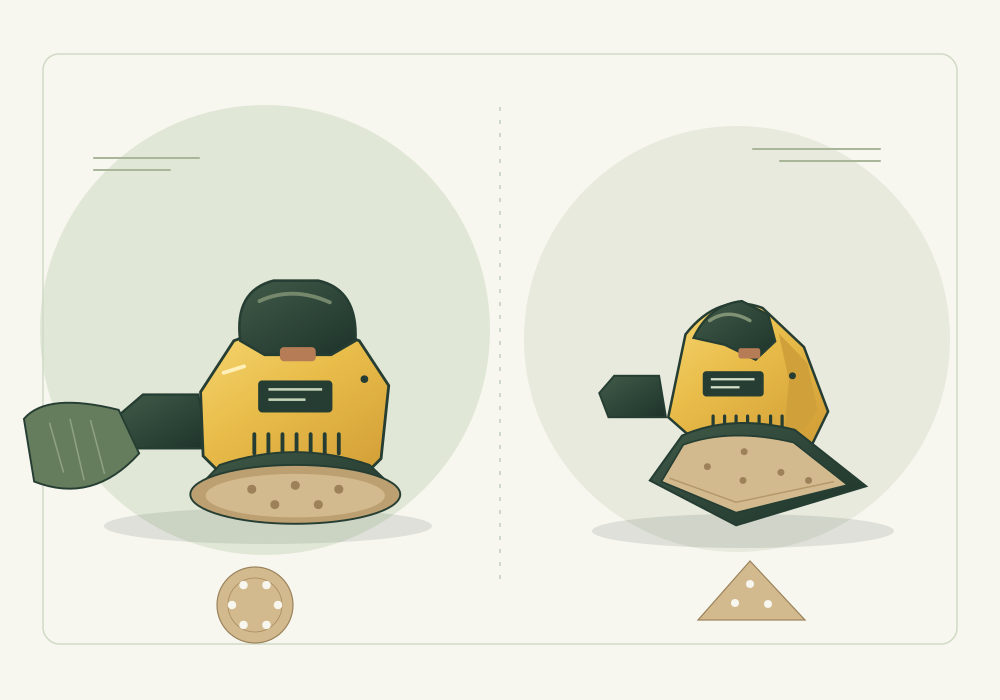
Random orbital vs detail sander: match the pad to the surface
A flat tabletop and the corner of a frame are not the same sanding problem. A random orbital sander commonly uses a round disc and combined sanding motion; a detail sander is shaped around reaching smaller or more awkward areas. Start with the surface, existing finish and result you need. Then check the abrasive format and dust arrangements for the exact machine, rather than buying on the motor or pad shape alone.
Educational tool-type comparison. General principles and buying considerations; no hands-on testing, model rankings or verified live prices. Check exact product documentation before buying.
THE SHORT VERSION
Two approaches. Different strengths.
01 / YOUR OPTIONS
Random orbital sander
A common option for suitable flat areas, using a round abrasive disc and a combined sanding motion.
Where it helps
Worth considering for larger accessible flat surfaces.
Common disc formats can offer a choice of suitable abrasives.
A useful general sanding category when its pad can reach the work.
Keep in mind
A round pad does not reach a tight internal corner.
The result still depends on abrasive choice, material and technique.
Disc attachment and extraction-hole layout must suit the exact pad.
02 / YOUR OPTIONS
Detail sander
A compact sanding category with a shaped pad intended to help with edges, corners and smaller areas.
Where it helps
A shaped pad can reach places a round disc cannot.
Useful to investigate for frames and detailed project shapes.
May complement a larger-area sander rather than replace it.
Keep in mind
A small pad can be less convenient for a large flat surface.
Replacement abrasives must match the shape and attachment.
Access to a corner does not guarantee safe treatment of an unknown old coating.
SIDE BY SIDE
The differences that matter.
These are type-level distinctions. Features, fittings and capacities vary by exact model.
Random orbital sander and Detail sander: buying considerations
Consideration
Random orbital sander
Detail sander
Surface to consider
Accessible flat areas
Corners, edges and smaller shaped areas
Common abrasive format
Round disc
A pad-specific shaped sheet
Check before buying
Disc size, attachment and dust-hole layout
Pad shape, sheet availability and access
Complete setup
Suitable abrasives and dust arrangements
Suitable sheets and dust arrangements
Avoid assuming
The tool reaches every corner
The smallest pad is the best tool for a whole tabletop
PUT THE JOB IN THE PICTURE
Which sounds like your work?
01 / THE SITUATION
A series of suitable flat furniture panels
Investigate a random orbital sander
Check the material, abrasive and dust arrangements as a complete setup.
02 / THE SITUATION
Frame corners and smaller awkward areas
Investigate a detail sander or hand sanding
Choose the shape and control needed for the area rather than buying by size alone.
03 / THE SITUATION
An old coating of uncertain composition
Identify the material before sanding
A dust bag or finer grit is not evidence that disturbance is safe.
Decide what the sanding is meant to achieve
Sanding might remove material, smooth a surface or prepare it for a finish. Those are different aims. Note the material and its condition before comparing machines. Thin veneers, edges and decorative details can need a more restrained approach than a broad solid surface. A more aggressive machine or abrasive is not automatically the better purchase.
Unknown old paint and building materials need assessment before disturbance. Dust extraction does not make a hazardous coating or material safe to sand. If there is a possibility of lead-containing paint or asbestos-containing material, establish what you are dealing with and get suitable advice rather than choosing a sander first.
Treat the abrasive as part of the tool
A good match between machine and abrasive matters. Confirm the disc or sheet dimensions, attachment method and dust-hole arrangement. Pads that look similar may need different consumables. Check that suitable replacements are readily available, particularly if a specialised shape is central to the reason for buying the machine.
Grit selection describes another part of the work, not a verdict on the sander. A coarse abrasive can leave marks that need further preparation, while a very fine abrasive may not achieve the removal needed. Choose a progression appropriate to the material and finish instructions; do not expect one sheet or one grit to handle every stage.
Choose access and control before collecting tools
Look at the areas you actually need to reach. A round pad can cover an open flat surface, but a shaped pad may be useful when the surrounding work prevents access. For a small awkward area, a suitable sanding block or hand abrasive may be enough. Consider this before buying a second powered tool for a brief task.
Handling, vibration, abrasive changes and the extraction connection all belong in the comparison. Neither dust collection nor a compact size removes the need for suitable precautions. This guide identifies roles and buying questions; it does not report measured removal rates or declare one type best for every surface.
Keep these in mind.
Start with the surface and the reason for sanding.
Match consumables to the exact pad, not just the brand.
A small hand-sanding job may not need another powered tool.
 chuck